
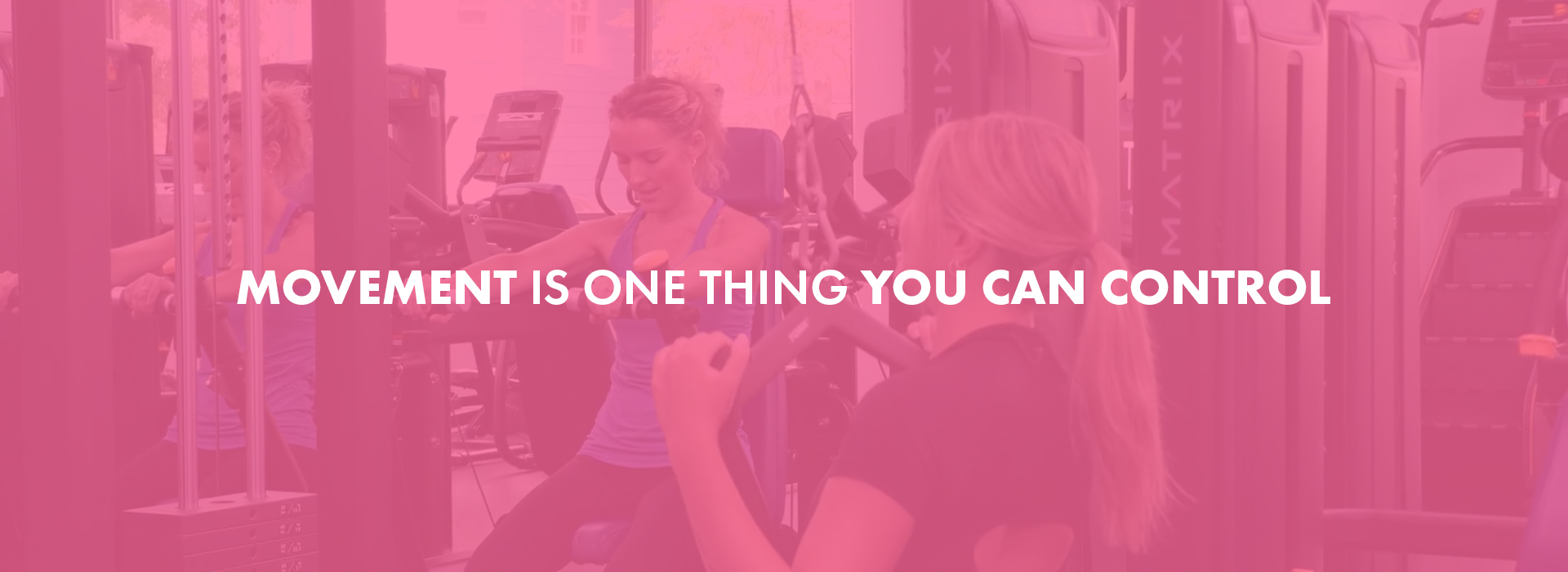
Why Exercise Comes Up Every October
October brings breast cancer into public conversation, and a good deal of that conversation lands on things nobody can change. Age, family history, and inherited genetic changes all carry weight, and none of them responds to effort. What tends to get less attention is the shorter list of factors that do sit within reach, and regular physical activity is on it.
That distinction is worth holding onto, because it sets expectations correctly. Exercise is not a guarantee against breast cancer, and no honest reading of the evidence treats it as one. It is one of several habits that research associates with lower risk, which makes it worth doing on its own terms rather than as insurance. Beau Monde Elite Fitness is a private members-only gym in Easton, Maryland, and the subject of this piece is the habit rather than the promise.
What the Research Suggests About Activity and Risk
The American Cancer Society states plainly that increasing physical activity levels can reduce the risk of breast cancer. It does not attach a percentage to that, and the absence of a number is informative. Studies in this area measure activity in different ways across different populations, so the direction of the finding is more reliable than any single figure pulled out of it.
What the Society does not claim is a mechanism it cannot support. Its own guidance says the reasons are not exactly clear and may involve effects on inflammation and on hormone levels. That hedge matters, because it keeps the claim where the evidence is rather than where a marketing line would prefer it.
Where Activity Fits Among the Other Factors
Physical activity does not sit on the Society’s list by itself. Body weight after menopause is also associated with breast cancer risk, which the Society links to estrogen produced by fat tissue and to higher insulin levels. Before menopause the relationship appears to run the other way, and the reasons are not well understood.
Activity overlaps with that, which is part of why it comes up so often in October. It is worth being clear about the limit, though. The guidance describes consistency held over years, not a single season of training, and a clean, uncrowded environment tends to make that easier to sustain than a crowded one.
How Much Movement the Guidelines Describe
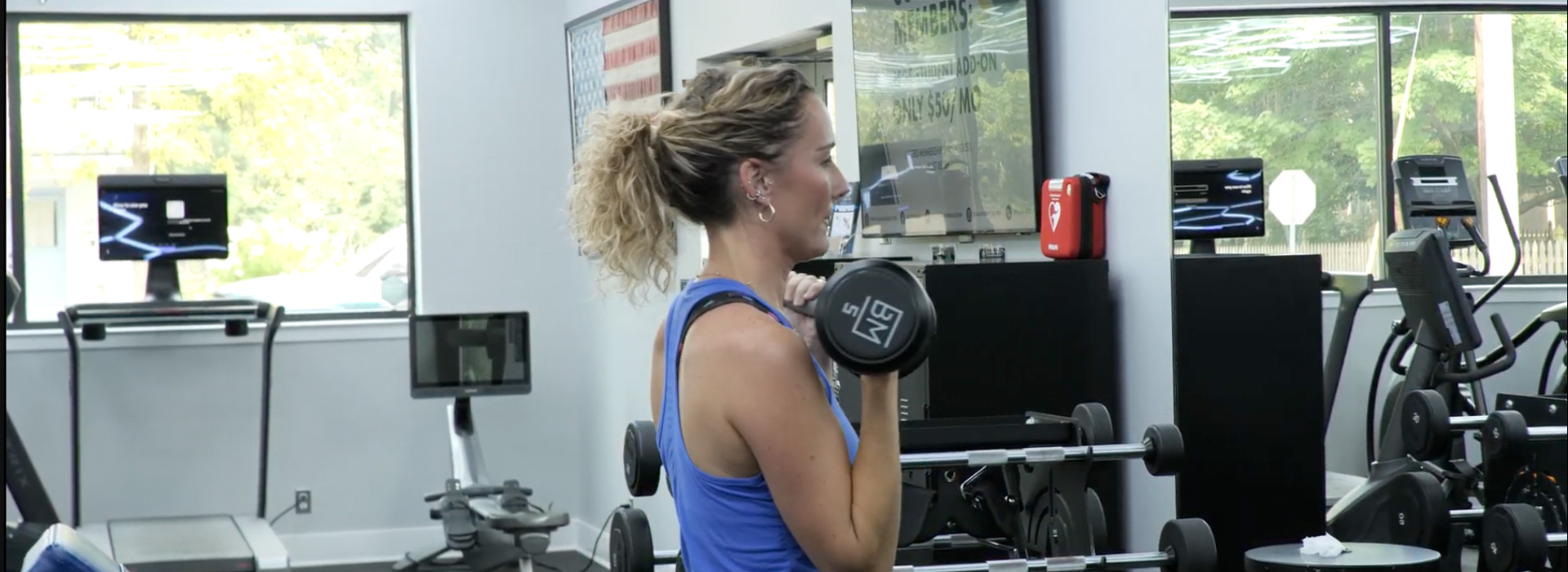
The American Cancer Society recommends that adults get 150 to 300 minutes of moderate-intensity activity, or 75 to 150 minutes of vigorous-intensity activity, each week, and it describes 300 minutes or more as ideal. Spread across a week, the lower end of that range is roughly half an hour on most days.
Those numbers are usually easier to reach than they look on paper, because they do not require that every session be long. Three or four sessions of forty-five minutes clears the lower end comfortably, and the brisk portion of a walk counts toward it. For anyone training around a full calendar, making time for exercise is more often a scheduling problem than a motivation problem, and whether a session lands in the morning or the evening matters far less than whether it happens at all. Round-the-clock access removes one of the usual obstacles, since a 5:30 am session and a 9:00 pm session count the same toward the week.
Strength Work Alongside Cardio
The weekly minutes in the guideline are aerobic, but strength work belongs in a complete routine and carries its own benefits for bone density, metabolic health, and the ability to keep training as the years go on. The two are not competing for the same slot.
A workable split is two or three strength sessions a week against two or three aerobic ones, with some overlap where a circuit does both at once. Beau Monde is equipped with industry-leading Arsenal Strength machines, including the Bi-Lateral Leg Press, Chest Press, Smith Machine, Squat Rack, and Power Rack, so a strength day does not depend on waiting for a station to free up.
Awareness, Screening, and What to Report
Training is only one piece of this. The rest is screening, knowing what is normal for your own body, and catching a change early enough to ask someone about it.
Knowing What Is Normal for You
The Society’s position on breast self-exams is more specific than it used to be. Formal self-exams and clinical breast exams are not considered sufficient for screening and are unlikely to find breast cancer early in people at average risk.
What it does recommend is breast self-awareness: knowing what your breasts normally look and feel like, and reporting any change to a healthcare provider right away.
Some people still examine themselves regularly as a way of holding onto that baseline, which the Society treats as reasonable without treating it as screening. The distinction changes what a normal result means. A self-exam that finds nothing is not a clean bill of health, and it is not a substitute for a mammogram.
Changes Worth Reporting
The most common symptom is a new lump or mass, though most breast lumps are not cancer. A lump that does not hurt, feels firm, does not move under the skin, and has uneven edges is more likely to be cancer, but cancerous lumps can also feel soft, round, or tender.
Other changes the Society lists include swelling in all or part of a breast even when no lump is felt, skin that puckers or dimples, nipple or breast skin that is red, dry, flaky, or thickened, pain in the breast or nipple, a nipple that turns inward, nipple discharge that is not breast milk, and swollen lymph nodes under the arm or near the collarbone. Any of these is a reason to call a provider rather than to wait and watch.
When Screening Usually Begins
For women at average risk, the Society says yearly mammograms are an option from 40 to 44, are recommended from 45 to 54, and from 55 onward can either continue yearly or move to every other year. Screening is recommended to continue as long as a woman is in good health and expected to live at least ten more years. Anyone with a family history or other risk factors should expect a different schedule, set by their own provider.
Breast Cancer in Men
Men can get breast cancer, and it is worth saying because it is easy to miss. Fewer than 1% of breast cancers in the United States occur in men, and a man’s average lifetime risk is about 1 in 755. The rarity is exactly what makes a change easy to dismiss, so the same advice applies. A new lump, or any other change, gets reported rather than waited out.
During and After Treatment, the Care Team Leads
Physical activity is often part of life during and after breast cancer treatment, and the shape it takes is a clinical question. Treatment type, recent surgery, fatigue, mobility, and medical history all change what is appropriate, and an oncology care team is the only right source for that guidance.
Beau Monde does not provide medical or rehabilitative advice, and nothing here replaces it. What our private facility can offer is the setting: a clean, uncrowded space with 24/7 access, so a session can happen at an hour when energy allows rather than at the hour the room is busiest. For anyone working through a plan set by their care team, the quiet tends to matter more than the equipment.
Building the Habit in Easton, Maryland
Guidelines are written in weeks, but the research behind them is measured in years, which means the only version of this that counts is the one that keeps going. Habit does more work here than motivation, and the sessions that survive a busy month are usually the ones already on the calendar.
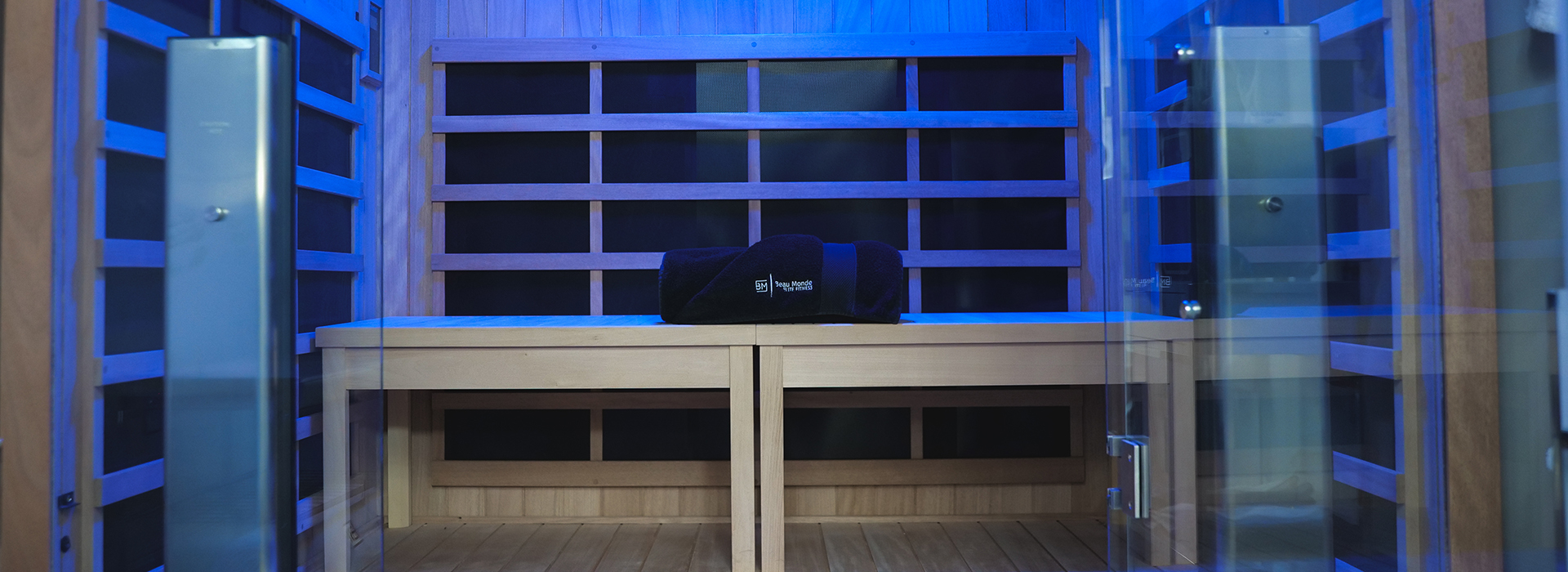
Recovery is part of what makes that sustainable, and it is often the first thing cut. Recovery is not time away from training. The infrared sauna and cold plunge are there for that reason, alongside the private bathrooms and showers, the provided towels and beverages, and the rest of the Elite Membership amenities. Members come in from across the Eastern Shore, including Easton, Preston, St. Michaels, Cambridge, and the surrounding towns of Talbot County.
Book A Tour
The honest bottom line is that no routine prevents breast cancer, and that regular activity is still one of the few things on the list a person controls. The weekly numbers in the guidelines are modest, the benefits reach well past this one topic, and the obstacle is usually consistency rather than effort.
Beau Monde Elite Fitness is a boutique, members-only gym in Easton, Maryland, with limited memberships and 24/7 secured access by key fob. The joining process starts with a tour and a consultation. Get in touch to arrange a visit, or read more about the Elite Membership.
Frequently Asked Questions
How might regular exercise relate to breast cancer risk?
The American Cancer Society states that increasing physical activity levels can reduce the risk of breast cancer, though no amount of exercise prevents it. A healthcare provider can advise on what fits your own history.
How much exercise do the guidelines recommend?
The Society recommends 150 to 300 minutes of moderate-intensity activity, or 75 to 150 minutes of vigorous-intensity activity, each week for adults, and describes 300 minutes or more as ideal.
Is it safe to exercise during breast cancer treatment?
That depends on treatment, surgery, symptoms, fatigue, and medical history, and it is a question for an oncology care team rather than a gym. Many people stay active during and after treatment under clinical guidance.
Does a breast self-exam replace a mammogram?
No. The American Cancer Society says self-exams are not sufficient for screening and are unlikely to find breast cancer early in people at average risk. It recommends knowing what is normal for you and reporting any change to a provider right away.
Can men get breast cancer?
Yes. Fewer than 1% of breast cancers in the United States occur in men, and a man’s average lifetime risk is about 1 in 755. Any new lump or other change should be reported to a provider.
