
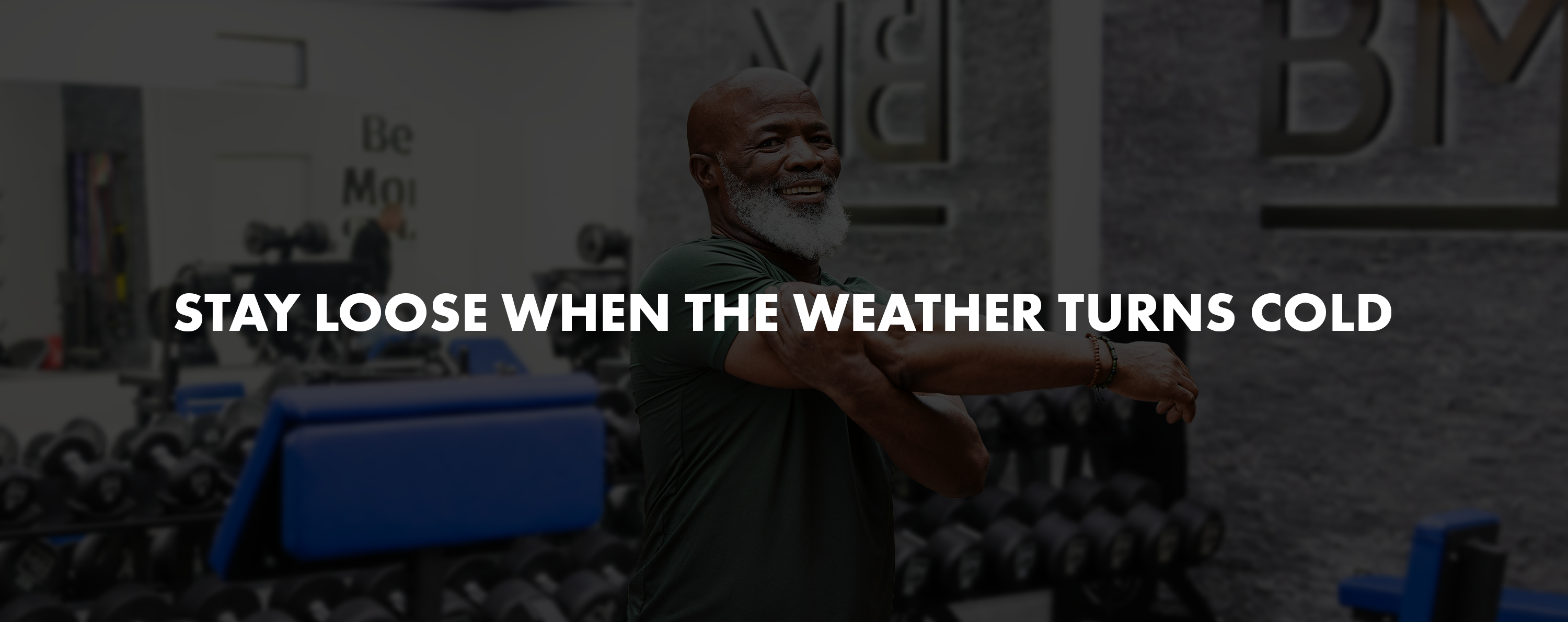
Why Do My Joints Feel Worse When It Gets Cold?
The first cold mornings in Easton tend to bring the same complaint with them. Knees take a few steps to loosen up, and a lower back that felt fine in September is suddenly tight on the way out of the car. Stiff joints in cold weather are one of the most common things people notice in late fall, and at Beau Monde Elite Fitness, a private members-only gym in Easton, Maryland, this is the time of year when a proper warm-up starts to earn its place.
In most cases that stiffness is not a sign that something has gone wrong. It usually comes from a mix of cold temperatures, changes in the weather, and a season that keeps people sitting more and moving less. The part you can control is also the part that tends to help the most, which is how often you move and how gradually you start.
What Cold Weather May Do to Your Joints
There is no single agreed cause, and most explanations of it are hedged for that reason. The most common one involves synovial fluid, the fluid that keeps a joint moving smoothly. Synovial fluid can thicken when the weather gets colder, which makes it less slippery and can leave a joint feeling stiff until it warms up.
Barometric pressure is the other usual suspect. Cold weather often comes with lower barometric pressure, which may increase swelling around a joint, and because a joint is a small space enclosed by a capsule, even slight swelling can be felt. Cold also narrows blood vessels, which can reduce blood flow to the fingers and toes and add to the ache there.
Why Some People Feel It More Than Others
Not everyone notices the weather in their joints, and the people who do often have a history there. Joints affected by arthritis, an old injury, or surgery may be more sensitive to weather changes. Muscles and joints also tend to hold less water with age, which may make soreness more noticeable. That is part of why two people can walk out into the same morning and have a very different experience of it.
Does Sitting Too Long Make You Stiff?
It can, and in winter it often does more than the cold itself. Long stretches in one position give the muscles and tissues around a joint time to tighten, and cold temperatures tend to make that worse. The colder months usually bring more of both, with shorter days, more time indoors, and walks that quietly drop off the calendar.
The fix is less about one long workout and more about breaking up the day. If you work at a desk, stand up and walk for a few minutes every hour or so. Do a few shoulder rolls and hip circles while the coffee brews, and take the stairs when you have the choice. None of that counts as training, but it keeps joints from settling into one position for hours, and it makes the workout you do get to feel much less like starting from zero.

How to Warm Up Before Exercising in Cold Weather
A warm-up matters more in winter than at any other time of year, and it is usually the first thing people cut when they are short on time. A good rule of thumb is to give the warm-up about twice as long in the cold, since muscles take longer to acclimate, and to do the aerobic part of the warm-up before any static stretching.
In practice that means five to ten minutes of easy cardio before you pick up a weight. A slow walk on the treadmill or an easy pace on the elliptical will raise your body temperature and get blood moving to the muscles you are about to use. Beau Monde keeps performance-grade cardio on the same floor as its strength machines and functional training tools, so the warm-up and the workout happen in one place.
Use Dynamic Mobility Before You Load Anything
Once you are warm, spend a few minutes taking the joints you plan to train through their range. Leg swings, bodyweight squats to a comfortable depth, walking lunges, arm circles, and band pull-aparts all work well. Keep the movements controlled and let the range open up over several repetitions rather than forcing it on the first one. Longer static stretches belong at the end of the session, when the muscles are warm and more willing to lengthen.
The first working sets should feel light. If a weight you handled easily in August feels heavy on a cold morning, take one more warm-up set before moving on. It costs a minute and usually makes the rest of the session feel better.
Mobility Exercises for Stiffness
Mobility work does not need its own hour. Ten minutes on a rest day, or added to the start or end of a session, is usually enough to notice a difference over a few weeks, and all of these can be done on the gym floor or at home.
Lower Body
- Hip circles: hold onto something stable, stand on one leg, and draw slow circles with the opposite knee, five in each direction.
- Ankle rocks: from a half-kneeling position, slowly drive the front knee forward over the toes and back, 10 times per side.
- Glute bridges: lying on your back with your knees bent, press through the heels and lift the hips, 10 to 12 times.
- Box squats: squat to a bench or box at a comfortable height, focusing on a smooth range rather than depth, 8 to 10 times.
Upper Body and Back
- Cat-cow: on your hands and knees, slowly round and then arch the spine, 8 to 10 times.
- Thoracic rotations: on your hands and knees, place one hand behind your head and rotate that elbow toward the ceiling, 8 times per side.
- Wall slides: with your back against a wall, slide your arms overhead and back down while keeping contact with the wall, 8 to 10 times.
- Wrist and finger circles, which are worth adding for anyone whose hands ache in the cold.
Move slowly, breathe through each repetition, and stay in a range that feels like a stretch rather than pain.
Cold Weather Workout Tips
Dress in layers you can take off. Skip cotton next to the skin, since it holds sweat and stays wet and cold. That matters most on an outdoor walk or run, but it also applies to the drive in and the walk back to the car after a session.
Keep drinking water. Hydration is just as important in cold weather as in warm weather, and thirst is easier to miss when you are not hot.
Lean on low-impact work on the days your joints are sensitive. Cycling, the elliptical, controlled machine work, and lighter loads for more repetitions are all easier on stiff joints than jumping or heavy impact, and they still count toward the week. Strength work is worth keeping through the winter too, since stretching and strength training can help bones and joints work better together.
When the weather turns, move the workout inside. Mid-Shore winters bring raw, windy mornings and dark evenings by five, and that is usually when an outdoor routine falls apart. Members have 24/7 secured access with a personal key fob under the Elite Membership, so a session can happen before work or after dinner without depending on daylight.
Heat and Recovery Through the Winter
Warmth tends to help stiff joints, and warm layers, a hot bath or shower, or a heating pad can all make a cold day easier. The same thinking applies after a workout. Ending a session warm, rather than walking straight back out into the cold, is easier when the infrared sauna and private showers are in the same building as the gym floor.
Recovery also includes the less visible parts of the week: sleep, rest days, and not stacking hard sessions back to back when everything already feels tight. Over a whole winter, that consistency does more for stiff joints than any single session.

Common Mistakes That Make Winter Stiffness Worse
- Skipping the warm-up because the session is short. Cold muscles and joints need it most on exactly those days.
- Starting with static stretching before the body is warm, which tends to do less than a few minutes of easy cardio first.
- Stopping exercise altogether until spring. Less movement usually means more stiffness, and a routine is harder to rebuild after a few months off.
- Training through pain that gets sharper. Stiffness that eases as you move is normal. Pain that builds is a reason to stop.
Keep Moving This Winter at Beau Monde Elite Fitness
The honest bottom line is that cold weather is likely to make your joints feel stiffer for a while, and that movement started gradually is still the most useful thing most people can do about it. A longer warm-up, a few minutes of mobility work, fewer hours sitting still, and a place to train that does not depend on the weather will carry most people through to spring. Beau Monde does not provide medical advice, so if your joints need more help than that, check in with your doctor.
Beau Monde Elite Fitness is a private, members-only gym in Easton, Maryland, with a clean, uncrowded floor and its recovery amenities under one roof. Members come in from across Talbot County and the Eastern Shore, including Trappe, Oxford, and St. Michaels. Joining starts with a tour of the facility and a conversation about your goals. Get in touch to schedule a visit before the coldest part of the season arrives.
Stiff Joints in Cold Weather FAQs
Why Do My Joints Hurt in Cold Weather?
Cold weather may thicken the synovial fluid that keeps joints moving smoothly, and the lower barometric pressure that often comes with it may increase swelling around a joint. Inactivity adds to both. The effect varies from person to person and tends to be stronger in joints with a history of arthritis or injury.
How Should I Warm Up Before Exercising in Cold Weather?
Start with five to ten minutes of easy cardio, then take the joints you plan to train through dynamic movements like leg swings, bodyweight squats, and arm circles. In the cold, give the warm-up about twice as long as usual and do the aerobic part before any static stretching.
Does Sitting Too Long Make You Stiff?
It can. Long periods in one position give muscles and joints time to tighten, especially in cold weather. Getting up to move for a few minutes every hour or so helps more than most people expect.
Is It Safe to Exercise With Stiff Joints?
For most people, yes, and gentle movement usually helps. Start gradually and stop if pain gets sharper.
